Saturday, May 2, 2009

So that's What Cool Is...

How much cooler can you get than a schizophrenic blowing up all the credit card companies in America? Most wouldn’t grieve the loss of all their debts in these hard economic times; in fact, many would argue it’s downright cool. Fight Club had a cool storyline, characters, and even casting.

The storyline is what has made Fight Club what it is; people love it because of the shock factor. It’s so unpredictable, and each time you watch it, you notice a new detail that adds meaning, depth, or humor to the movie. This is obviously following in the footsteps of Quentin Tarantino who popularized a discontinuous plot line. The humor and criticism in the writing is cool. The writer of the movie was willing to criticize the very people watching his movie and open their eyes to the society that they live in.

We haven’t talked too much about casting this year, likely because most of the movies we watched, the actors were pretty unfamiliar. So, in this movie, we can finally discuss casting. Brad Pitt was a great actor to choose for the “cool” character; Tyler seems to have it all together. He is what we have labeled all semester as cool. He does his own thing and has all the answers to the hard questions. He’s put together, powerful, and calm. Tyler was the perfect culmination of cool because he didn’t have materials that made him cool, which is all too often how we think of cool, he just had the “natural-seeming” cool persona.

Ask someone if they’ve seen Fight Club and the average response is something like, “Yeah! I love that movie; it’s so cool.” I’m not sure many could give you good reasons as to why it’s cool, but it just is. This is a great way to finalize cool because although we had great discussions and debates about cool throughout the class, I believe we all came to respect cool a lot more and to realize that cool is not a definite concept.

After all the movies and all the analyses, I’ve come to the conclusion that cool is indefinable. Cool is cool. It’s fleeting and ever-changing, but one thing is for sure, there is no formula for cool. Cool doesn’t discriminate on race, gender, or age; it doesn’t follow rules; it looks, feels, smells, tastes and sounds different to each individual; it will never disappear but doesn’t stay anywhere too long either. Cool is playing an eternal game of hide-and-seek with society. Good luck on your search!

Thursday, April 30, 2009

Stressing About Your Sofa Isn't Cool

Fight Club was a great movie to end the semester with since it is inarguably cool in every way we discussed. There’s a character that is cool, the plot and story line are cool, and, finally, the ending is cool.

“How much can you know about yourself if you've never been in a fight?” Society and the current generation of people are so ready to avoid conflict that we miss a lot of what it really means to live. At one point in the movie, a member of the fight club tries to pick a fight with a priest by spraying him with water as he walks by, then throwing his Bible on the ground and spraying water on it, but it takes awhile for the priest to decide he wants to try to defend his beliefs; then, when he does he takes a swing and runs away. We, as a generation, are of the mentality that we are all winners and if you don’t have anything nice to say, don’t say anything at all; we live by these clichés. It’s easier to get wrapped up in our things and worthless jobs than to face reality and possibly conflict and difficult decisions. This façade of peace and happiness actually leads to a outrageous amount of built-up tension which is why we keep seeing seemingly unexplainable acts of violence. If we stopped putting up fronts and, instead, addressed our problems, the world would be much saner. The fight club was so liberating because it forced people to feel in a society that otherwise forces them to be numb.

Another theme of the movie is that we can’t control everything. Life will never be complete or perfect. Trying to make every little thing fit into a mold causes a society of bored individuals who hate themselves and their lives. The movie satirizes self-help groups and mock-suicidal cries for help. Everything is taken to the extreme because we don’t have a defining event that is universally plaguing everyone; instead, each individual finds a personal crisis pretty much daily. The coffee-maker not working one morning could start World War III. Our coping skills are nonexistent. When a true crisis happens, it seems like the end of the world compared to the coffee-maker tragedy of the day before.

Every second we are dying, and instead of getting the most out of life, we are choosing the color for the pointer on our computer. People’s lack of meaning and purpose leads to creating meaning in materials. We unnecessarily cause our lives to be fast-paced and stressful when, in reality, it isn’t. Fight Club doesn’t stop at satirizing the meaningless masses but goes onto satirize the masses who find all-encompassing meaning that takes away their individual power to think. The majority of people are too quick to follow; instead of voicing their own independent opinions, they latch onto others viewpoints.

Fight Club exposes many of the problems that we are facing as a society that lacks a major defining event or cause. It’s cool because it takes a critical look at where we are right now and identifies the major problems that nobody else is willing to acknowledge.

Sunday, April 26, 2009

A Director Whose Name We Actually Know

Reservoir Dogs is, in its own special way, cool, not so much because of all the gore or the story line, but because Quentin Tarantino stepped outside the box to make a revolutionary movie. For one thing, the characters are so much more dynamic than in a typical action movie. Each one had his own little quirk; it was evident that Tarantino loved his characters and thought out each one in laboring detail. The coolest character in the movie is Mr. White because he stands up for what he thinks is right, even though he is actually wrong; no matter what, he doesn’t waiver in what he thinks is right and wrong. He is willing to kill his boss for some man he barely knows because it's "right."

This new type of plot line is cool. Making the audience play the detective instead of just watch one is so much better than the cookie-cutter, predictable, boring plot lines of the past. The mixed up time line throws the audience knee-deep into the action of the movie right after the opening credits. The movie-goer is now forced to think; action movies are no longer mind-numbing experiences. Instead, Tarantino actually had a unique vision and was determined to make movies according to that idea even if it didn’t follow the norm.

This is what makes QT cool, his courage to be different and make the movies the way he wanted to. He wasn’t afraid of looking disturbed or being too graphic for his audience. Before Reservoir Dogs, movies like Hostel, Saw, Momento, or Fight Club would have never come out. Momento is actually one of my personal favorite; it’s cool. A movie where you guess seven different possible outcomes before the end and all of them are wrong is entertaining.

Although all the gore seems a little much at times, there are obviously people who enjoy it because it seems that movies just keep showing more and more blood and guts. For someone to be the first to put that kind of stuff in a movie, you have to be cool, indifferent about others opinions, and driven towards a goal.

Not only is all the gore a new feature in his movies but also that he writes about the down time of the criminals along with the action. The characters in his movie become so much more real when we see them talking, going out to eat, or hanging out. Before this, all we saw of the life of the criminal was the crime, but Tarantino exposes the uncool side of the criminal. The side that is concerned with looking good and telling the right stories in front of his buddies, the side that won’t give a dollar for a tip, the kind that fights over the meaning of Madonna’s songs. The criminal is no longer a hardened man who only thinks about crime.

Quentin Tarantino is cool for being able to come up with something new which is why he is such a well-known director. He is unique, indifferent, passionate, and innovative, all ingredients to cool. So, while the characters in Reservoir Dogs aren’t necessarily cool as we’ve seen it throughout the semester, Tarantino is cool for making the new style of movie.

Thursday, April 23, 2009

Cool and Lame

Cool:

1. Winning
2. Intelligence
3. Beaches
4. The word cool
5. Being fit
6. Nonconformity
7. Determination
8. Spirituality
9. Soccer
10. Being Independent
11. Ipods
12. Sex
13. The Borne Identity
14. Athleticism
15. Feminism
16. Open-mindedness
17. “Going Green”
18. Lesbians
19. Obama
20. Doing
21. Self-exploration
22. Doctors
23. Hybrid Car
24. Nature and the Outdoors
25. Ellen DeGeneres
26. Achievements that are earned
27. Peace
28. Gandhi
29. Fighting world hunger
30. Living Now
31. The Colbert Report
32. Cynicism
33. Authentic
34. Selflessness
35. Wealth
36. Confidence bordering on arrogance
37. Finding something out yourself
38. Talking
39. Dogs
40. Holding hands in public
41. Focused
42. Youth
43. Goal-oriented

Lame:

1. Losing
2. Having an IQ lower than Paris Hilton
3. East Texas
4. Words like “hip” and “square”
5. Not being able to fit into your pants
6. Conformity
7. Complacent
8. Religious
9. Golf
10. Depending on others
11. CD players
12. Abstinence
13. Casablanca
14. Couch Potatoes
15. Hyper-masculinity
16. Traditionalism
17. Littering
18. Homophobia
19. Sarah Palin
20. Watching
21. Guided discovery
22. Lawyers
23. Hummer H2
24. Shopping Malls
25. Jerry Springer
26. Advancement by ass kissing
27. Violence
28. George Bush
29. The War in Iraq
30. Living in the Past
31. CSPAN
32. Not saying what you mean
33. Fake
34. Greed
35. Poverty
36. Self-conscience and shy
37. Believing what others tell you
38. Listening
39. Cats
40. Making out in public
41. Withdrawn
42. Being Old
43. Goal-less

I. Obama and Sarah Palin

Obama represents cool because he is original. He says what he wants and brings new ideas and concepts to American. Obama stands strong by his beliefs and is against discrimination. This is cool today, being unique and having an idea and running with it while still respecting everyone’s beliefs around you.

Palin, on the other hand, didn’t know what she was talking about. She seemed to be trying to say whatever she thought Americans wanted to hear.

II. Lesbians and Homophobia

Lesbians are cool because they represent an overall oppressed group, women, breaking out and not relying on men. Overcoming obstacles to get recognition is cool.
Homophobia on the other hand is no longer cool. It’s someone trying to press their beliefs on others. Most Americans are not in favor of discrimination of anyone. The few small-minded people trying to unfairly control others’ lives are uncool.

Many of the terms found in each list seem to be interchangeable or to have recently been in the opposite column, times are changing. With these changes, it’s evident that it is becoming more and more cool to be open-minded. In the recent past, cool has had certain well thought out boundaries. I think today what defines the line between the cool and the lame or the “hip” and the “square” is getting blurred. It’s harder to definitely say this is cool and this is uncool today. Ten years ago, you could have never said a girl who is in love with another girl is cool; today it is cool. What isn’t cool is being limiting or trying to press your beliefs on others. There’s really not one cool image anymore. Cool isn’t so much about the stuff or the labels as much as it is about the attitude of the person. Things aren’t as cool as they once were; a person could make just about anything cool.

Cool is a much more fluid term today than it once was. Nobody tries to define cool today; it’s either you have it or you don’t. Motorcycles and leather jackets don’t make you cool, rock and roll music doesn’t make you cool, being an athlete doesn’t make you cool. Nothing on this list can make a person cool; instead, it’s that these things have been cool within our culture. Cool is mostly about being yourself, through all kinds of adversity.

Tuesday, April 21, 2009

To Be Cool You Need an Obsessive Passion

Is it cool to be original or a good reproduction of an original? Is cool mainly conformity or originality? In order for someone to obtain a cool that transcends time, she has to be original and step outside of society’s comfort zone. However, this also means that person has to be willing to face adversity because he will be controversial. If you look at all of the people who have attained a sort of cool that can’t be denied, they all faced groups that either loved them or hated them for their originality.

Bob Marley is cool; someone would be hard pressed to find a person who doesn’t recognize his music and have an opinion about it. He brought reggae and a philosophy of “one love” to the world. That doesn’t mean everyone loved or agreed with him; there are those who think Marley is just a crazy stoner and others who live by his philosophy. He didn’t care what anybody else thought though because he believed in what he was doing and did it for himself, nobody else.

What really makes a person cool is that they aren’t necessarily trying to make a statement; they’re just living the way that feels right for them. So, I don’t know that all the drag queens in this movie were really “cool,” but the original drag queens were cool. The drag queen movement is cool. Just as the gay movement, feminine movement, and Hippie movement. “Movements” are cool because the people creating them and furthering them aren’t looking for definition for their lives, the movement is their lives. They want others to share in what they’ve found to be an exciting way to live life. Their meaning is the movement. They aren’t trying to define their own meaning in the movement; instead, they are defining the movement through their own self meaning. The original creators aren’t so much trying to get accepted as they are just living the way they want, breaking the ice; they don’t even know they’re creating anything. The generations that pick up the movement are left trying to forge an accepted place in society. This is the point, many times, when the movement takes a turn for the worst because there are people who join in the quest of cool rebellion, not because they can’t live without the lifestyle. It’s no longer a core group of “die-hards” who are indifferent about society. Now, it’s a more mainstream sub-culture.

Cool is breaking new ground in terms of society. To become truly legendary, for people to remember your name, you have to break new ground, not follow a cookie-cutter mold. All the cool people, of course, had their role models, but they didn’t try to do what their role models did; they borrowed from their role models philosophies and worked to be even better than the best. Abby Wambach looked up to Mia Hamm and the rest of the ‘99 Women’s National team, but she didn’t try to score almost as many goals as Mia or to play exactly like she does. She is herself and has her own techniques and style that is a combination of all the people she looked up to and her own attitude.

The drag queens in Paris Is Burning were cool because they were willing to ignore social norms and define themselves however they thought was most accurate. Drag isn’t cool to where it is a household topic or something you would see every day, but cool is rare and unaccepted or unattainable until it becomes normal, and the revolutionaries who began it are remembered. The quarterback in the hometown high school football game is relatively “cool” when compared to the water boy, but this is such a narrow, static definition of cool. Real cool is revolutionary; it’s saying to the world, “This is me, like it or not. And I’m not changing for anyone.”

Thursday, April 16, 2009

A Man who Dresses Like a Woman Can Be Cool

Paris is Burning represented gay culture as much as a movie about ninjas would represent Asians. Black, transgendered New Yorkers are a very miniscule part of the gay subculture and some would argue that they are not a part of the gay subculture. All transgendered individuals were categorized as gay up until the nineties when they began breaking out as a separate group. Most transgendered people do not consider themselves to be homosexual. For instance, a biological man who feels like a woman thinks he was born into the wrong body and gender and is a woman who likes men-in most cases- and not a man at all. Ironically, the transgender image was transposed to homosexuals, a very misleading stereotype. Gays and lesbians do not want to be the opposite gender. Lesbians are attracted to other women and gay men to other men. Their relationships don’t conform to the heterosexual norm as they once did before gaining more acceptance. There is no “man” and “woman” in the relationship; there’s a woman and a woman or a man and a man. I don’t think it’s correct or appropriate to extrapolate transgender culture to gay culture; homosexual and transgender are not interchangeable words.

African American, transgendered people are probably one of the most discriminated against groups in American. The Balls are the one place these people can let loose and be who they want; they can escape the harsh realities of everyday life. Today transgender people are becoming more and more acceptable; although, they are still nowhere close to having equal and fair rights. Not all transgender people are flamboyant, over-the-top drag queens. I’m not at all discrediting or criticizing this piece of the transgender subculture; instead, I’m saying that people need to realize that this is a very, very small snapshot of a particular group in the "gay" and transgender community and cannot be used to represent gay culture or for that matter even transgender culture. When watched from the wrong context, this movie can be misinterpreted and made to over represent a community. There are transgender people who are very quiet about their transition. The people in this film come from rough backgrounds and neighborhoods in New York, but there are gay and transgender people who come from affluent, loving homes. This documentary is an invaluable depiction of the role gender, economic status, and race play in life; however, it is not a general view of gay culture.

The gay community and the transgender community have separated themselves more and more from each other to focus on their own goals, which are not specifically the same. While the gay community is looking for equality in marriage, employment, and the military, transgendered people are fighting for the right to get their birth certificates changed to the opposite gender. Once their birth certificate is changed, they are technically heterosexual couples and have complete rights under the law. This is not to say they aren't still struggling for rights in employment and marriage, but ultimately gays and transgender have similar goals but different specific ideas for the small practicalities that are granted. For instance, in some cases, transgender is taken out of bills during legislation to try to get them to pass since the transgender voice is so small compared to the whole LGBTQ community.

In the beginning of the gay/transgender equal rights movement, many stayed hidden as much as possible while drag queens were loud, visible, and flamboyant. They created an image for homosexuals that stuck. All the small-minded majority could see was that a man was with another "man" and one of them wanted to be a woman; they weren’t willing to look at the fact that this “man” thought of herself and categorized herself as a woman, not gay. Homosexuals, on the other hand, are happy with their gender; they are just attracted to the same sex.

Gay and transgender people are real; they don’t want to hide, and it’s not their fault that they have to. Society forces these people into the closet because it doesn’t accept these innate factors of a person. People are small minded and selfish; how could society push gay and transgender people into such a small box. Gay and transgender individuals are your neighbors, teachers, lawyers, doctors, friends, and family. This movie made the transgender community feel very separate and withdrawn from real life when, in reality, the majority of homosexuals and transgendered are normal, well-adapted people. Homosexuals and transgendered are not asking for special rights or even acceptance, just equal rights.

Although they are both fighting for equality, gays and transgendered are not the same. All gay men are not all flamboyant, limp wristed men who speak with a lisp; all lesbians aren’t short-haired, stocky softball players; all transgender are not drag queens in enormous ball gowns. These are just the ones that people notice and the stereotype they have because these people can’t "act normal" like society asks them to do. No one should have to act straight; if all the gay and transgender people in this world had to wear a triangle on their arm, society would be shocked at the size of the LGBTQ community. Trying to fit LGBTQ people into one image or stereotype for TV and movies is essentially the same as the propaganda Nazi’s put out against Jews or the “Uncle Tom” blacks seen in early TV.

Unfortunately, most gay people decide it’s better to blend in with society and play straight than struggle with discrimination. At one point in our history, we asked African Americans to act invisible. Now, history is repeating itself, and we are asking homosexuals and transgendered to appear invisible with policies such as “Don’t ask, Don’t tell” and DOMA. States like Arkansas are so conservative and ridiculously behind the times. Massachusetts, Connecticut, Vermont, and Iowa are all allowing gay marriage, yet in Arkansas, they’re supporting legislation that limits homosexuals’ right to adopt. Gays, lesbians, and transgender are everywhere; it’s just that most people don’t know because it is a minute part of who that person is as a human being. It’s as much a defining factor as the color of a person’s skin. Sexual orientation or gender should not be the only factor that defines a person. Until the government is able to grant equality under the law to transgendered and homosexual, they are essentially condoning discrimination.

Tuesday, April 14, 2009

Cool Individuality

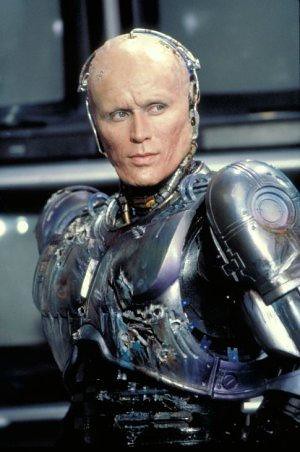
In contemporary times, cool is not the word I would use to describe Robocop. Instead, I would probably say it’s a classic satirical action movie that should be appreciated for what it was during the time. The slow, moving machines and computer noises are annoying now, but in the eighties it was state of the art. Of course, the satire is probably the true cool aspect of this movie. By missing the satire, the movie just seems a bit goofy and over the top; however, watching the movie with the understanding that it’s a satire makes it cool. So, rather than the actors, characters, or situations being cool, the writer and director are the cool ones because they step out of the box and write a criticism about how things should be changed. They have the courage to step up against the mainstream and challenge widely accepted ideas. In American society, voicing your opinion is less revolutionary than other places where the government controls free speech. Regardless, it’s still cool when a person stands up for their ideals, examples of this in an extreme situation would be people like Gandhi, Malcolm X, or Harvey Milk. So, while the creator of this movie is no Gandhi, he still fights for what he believes in.

Robocop has all of the ingredients of a badass besides one key component; he is not human. A major factor in cool is being able to surpass normal human flaws and temptations and take human abilities to a whole new level. This is why it was necessary to emphasize Robocop’s humanity because, as a robot, he can’t be cool anymore than a car or a cell phone. Technology is an accessory to a person’s cool; for instance, James Bond is cool because of the guns, cars, and spy tools. The man who created Robocop was greedy and malevolent which reflected on Robocop; I saw Robocop as a sort of Frankenstein, not cool. Instead of being cool, Robocop is pitiful. He lost his life being a heroic cop, was turned into some corporate science experiment, and had his family and life ripped away. Robocop had no say in his own destiny and was ultimately at the disposal of a corporation. He was a programmed computer, not a free-willed individual which was what kept him from achieving cool status.

Robocop presents a sort of cool individuality. The writer employs humor and a popular genre, action, as a medium for expressing his serious opinions about privatization. He captures a large audience and conveys his ideas through film. So, for once, this film, ironically, shows a sort of behind the scenes cool, not an in-your-face, hyper masculine cool.

Wednesday, April 8, 2009

Privatization is Cool

Is a commercial for an artificial heart immoral? Privatization is a blessing and a curse. Most economists would argue for a complete free market economy because supply and demand is the best, most efficient way to organize an economy. The novel Invisible Heart is a great example of this viewpoint; it points out the danger of even a small amount of government intervention in an economy, like in the United States. On the other hand, there is another school of thought, exemplified in RoboCop, is that privatization breeds corruption.

Privatization and corporations don’t lead to corruption anymore than government control does. Society has a stereotypical image of CEO’s of companies being selfish, money-hungry, malevolent monsters when in reality the majority of CEO’s and executives are not this way because it doesn’t promote good, successful business. Much of this stereotype stems from the fact that people don’t really understand the benefits and harms of globalization and outsourcing. Not only, does outsourcing drive down prices for the company but also the consumer which gives each individual more buying power. Also, the popular argument that we are exploiting poor countries and their citizens is not completely thought through. These people wouldn’t work in the company if they had a better option, no one is forcing them into the workplace; it’s unfortunate that the best option for some is a job that pays a dollar a day, but that’s reality. Just look at America when we were first beginning; we had child labor and poor working conditions. Developing and underdeveloped countries have to start somewhere.

A free market promotes entrepreneurship and innovation. Many of the medical inventions we enjoy today wouldn’t be here without competition. Although in RoboCop they satirize the invention and marketing of the artificial heart, people are stagnant and mediocre materials result without an incentive. Although it’s hard for some people to think of medicine as a business, it is. Doctors are not in it completely for the money or they wouldn’t make it, but as the cliché goes, “money makes the world go round.” So, doctors, like anyone else, are out to make a profit. There would be no reason to improve treatments, pharmaceuticals, and procedures if it didn’t in any way benefit the doctor. Canada’s medical system is so far behind ours in America because they are not forced to compete.

I’m not saying that people should be let loose to behave however they want; there needs to be rules to keep honest people honest. At the same time, under any system people can be corrupt. So, it’s best to promote innovation so the economy can grow.

Tuesday, April 7, 2009

Sex, Drugs, and Disco

Saturday Night Fever implies the dichotomy of being cool. It’s just a front; someone is never cool at all times or in all situations because cool is perceived so differently by each different group of people. Tony is the leader of his group of friends and the king of the disco; however, outside of the disco or his little circle he isn’t cool. At the paint shop he could be cool because he is good at what he does except for the fact that he is working at a dead-end job. He is still living with his parents and stuck in his small community without any options. Juxtaposed to the free-spirited characters in Easy Rider, Tony is limited. The disco is the only place he has any control. However, even in the disco, what do they have power over? In reality, Tony, the king of the disco, does menial labor at a paint shop where he’ll likely work for his whole life and lives with his parents. At nineteen, he should be getting out of the house and starting his own life. Instead, the only time he is living is when he’s at the disco; it’s the only thing that gives him purpose. Tony at the disco is the image of cool that we have seen from the start; a macho guy with an indifferent and confident attitude. The Tony that we see in daily life, the one who still lives under his father’s rules, is not cool; he uses the disco to escape from his dead-end reality.

The search for meaning and purpose is cool, and compared to the rest of the people in this movie, Tony is on the search. He thinks he found meaning at the disco, but after he wins the prize, he realizes his purpose in life is not something tangible. Where can he go after unfairly winning the prize money? He gets scared because everything he finds meaning in is false. The disco doesn’t mean anything outside the walls of the club. As far as cool goes, someone is only cool when they are in their element. Brandi Carlile is cool when she’s up on stage at one of her concerts, but walking down the street the next day, the majority of people probably would not even recognize her. When she has a microphone and guitar in her hand she is cool, but otherwise, she’s just an average person. Same with Tony, when he is dancing, he is cool; anyone who knows him for his dancing thinks he’s cool. However, those who don’t appreciate the dancing don’t appreciate him for the same reasons. He may not seem cool or special to them. So, cool is a matter of recognition and appreciation by the observers.

A modified Holy Trinity of cool-sex, drugs, and disco-runs rampant throughout the movie. Instead of sex, drugs, and disco being a legitimately cool thing, it is cast in a negative light. When a rational person looks at the situation, it is not cool. The disco is rigged, people are taking drugs to escape life, and women are raped. Ironically, the Holy Trinity of cool is not cool in this movie.
Saturday Night Fever exposes the flaws and dual nature of cool. Cool is a matter of audience, not an absolute state of character.

Wednesday, April 1, 2009

In Defense of Chicks With Guitars

The last couple of years I’ve become a big fan of the “chicks with guitars” genre of music; it could also probably be classified as indie or folk rock. This type of music is a key component of the lesbian culture. Artists like Indigo Girls, Brandi Carlile, Melissa Etheridge, Tracy Chapman, Ani Difranco, and Tegan and Sara are just some of the names in this genre. Walking into one of these artists’ concerts, it would be evident right away that this music is part of the lesbian counter culture.

Last year I went to an Indigo Girls and Brandie Carlile concert in Austin. It was full of girls wearing American Eagle boy’s shorts and t-shirts, some with backwards or tilted hats and tennis shoes holding their girlfriends’ hand. Anyone just walking in to watch some live music that night would have been thoroughly confused and misplaced. This music serves an important purpose of making a common thread and meeting place of members of this counter culture. Someone who is questioning their sexual orientation who in other times in history may have been unable to connect with the lesbian community could now easily find a concert in their community to get connected with others and figure out their feelings. The lyrics obviously talk about lesbian relationships; it’s exciting to hear songs that actually relate to your own life and relationships. Asking someone about certain artists is almost like a code to ask if she’s gay. When you ask someone, “do you listen to Ani?”, it’s like asking are you familiar with the lesbian counter-culture because someone listening to this type of music is necessarily exposed to it.

These songs normally have political messages that are in line with the general liberal attitude of the lesbian community, including the environment, LGBT issues, and general human rights issues. Indigo Girls even have an activism tab on their webpage. This music is more of an art form/activist tool than just a flippant form of entertainment. Songs range from political critiques to anecdotal retellings of relationships. Ani Difranco is famous for her unique, highly-opinionated lyrics and style. In her song Fuel, her nonconformist style is evident: “except all the radios agree with all the TVs, and all the magazines agree with all the radios, and I keep hearing that same damn song everywhere I go…” This music sends a message and unites a group of people.
Obviously, the overlooked genre of music of indie rock is so much more than just a little known form of music. It is the background to the lesbian counter-culture.

Tuesday, March 31, 2009

Changing the Image of Cool

Overall, I don’t think Shaft is cool. Maybe in his time and to a specific group of people Shaft served as an icon. He is strong, indifferent, tough, and testosterone-driven like all the other cool icons we have looked at thus far. Although this overly masculine persona was extremely cool in the past, specifically in the eras from which these movies are taken, there is a much more diverse definition of cool in contemporary society. I feel like since the seventies, we have moved further and further away from this version of cool. Although there are still movies today like American Gangster and 300, these movies aren’t written in the setting of current society; they are set in the past. Any characters that fulfill this “badass” caricature in films based in contemporary times are so much more complex and diverse than these identical images of the past.

Shaft represents a cool that is liberating for African Americans. It was the first time to see a cool, Black, leading character in a popular movie. I don’t want to diminish the importance of Shaft as a ground-breaking movie for African Americans. At the same time, I don’t feel like Shaft would qualify as cool in 2009. I don’t think that any of the characters we have examined from Bogart to Wyatt would be cool if they were living today. Their cool was a matter of timing. Some bands like AC/DC, The Beatles, Elvis, and Nirvana are still cool, in their own rights; however, if they were starting today, they wouldn’t have the same impact. Rock and Roll is here, so someone like Elvis shaking his hips wouldn’t be so cool anymore. A major ingredient for cool is innovation and revolution. We can appreciate these past icons of cool for what they were then and the aspects of their personal style that have transformed and in some way carried on to our own version of cool in contemporary society, but they would not be the same today as they were then. Cool is in some ways a matter of timing because there are so many factors that contribute to “cool” that it has to be the right time and place for someone to reach their full potential of cool.

Examining cool through film, we will necessarily have to focus on the super-masculine, tough-guy image for most of history. This is not to say we don’t still see flashes of this image in movies geared towards men like Fast and the Furious and Bourne Identity, but now these characters have a sensitive side, are more dynamic than in the past, and are forced to deal with much stronger female characters. The closer we get in the time line to current society and current movies, the more we see an abandonment of this traditional image to a more unique and diverse image of cool. Especially today with more and more female leading characters, women are beginning to make their mark on the image of cool.

Thursday, March 19, 2009

Expanding the Definition of Cool

Shaft is an interesting movie, not one of my favorites, but interesting. I’m sure that Shaft appeals to certain audiences as cool. He was one of the first “badass” black protagonists in a movie. However, from my perspective Shaft was too cliché. Besides the fact that he is Black, he doesn’t have any unique, defining characteristics. It makes me wonder, is the only allure to Shaft is the fact that he’s an African American protagonist? If John Shaft were white, would the film be what it is today? I appreciate the film for breaking barriers that were present to the race at the time. At the same time, Shaft wasn’t making any overt, respectable points besides that Black men can play vigilante, Testosterone-driven, gangster types too.

Another part of the movie that caught my attention was the recognition, as we’ve seen in earlier movies, of a gay man. This time, unlike in The Public Enemy, the fact isn’t just hinted at, it’s stated. Gays even as late as the seventies, and still sometimes today, play roles of comic relief. What was the point of that character besides to acknowledge that there were gays? Or was the point to demean Caucasians, since being gay was seen as negative at the time and the gay man is white in a movie where race plays such a major role?

While looking at the movie critically for examples of cool, I thought about how narrow our study of cool has been when in the grand scheme of things there is such a wide range of cool. Do most people think that cool is only found in manly, dissident, men? Where do women come in? The indifferent men of the past have dominated cool for a long time, but by the seventies, are they still the main source of cool?

If cool is based solely in this manly archetype, I will lose a lot of respect for cool because this persona is a lame façade. No one really lives the lives of the men we’ve seen in these movies. Also, if most of the cool men we’ve examined have their characters dissected, it’s evident that the reasons for their behavior are much less cool. Many of them are emotionless to protect a broken heart, and, therefore, miss a huge portion of life because they are hiding. The men who seem to be so tough are normally just taking the offensive so they don’t get stuck on the defensive. Overall, I would like to expand the definition of cool away from these masculine caricatures.

Sunday, March 15, 2009

Cool is Rebellion

An important aspect of cool in the film is, as Donna puts it, the Holy Trinity of cool: sex, drugs, and Rock and Roll. This counter-culture movement took America by storm. Rebellion is the undertone of all three of these ingredients of cool. All of them, in some way, go against fundamentalist Christian beliefs. Sex, especially today, is cool. It has, throughout history, been such a taboo; so, to throw it out in some way for everyone to see, even just hinting at it, is cool. Women in movies, whether or not it’s the image women should have, are cool because of their sex appeal in many cases such as the Italian Job. On the same token, drugs are cool because they are illegal and represent rebellion against society’s belief system. There are so many different attitudes toward drugs, as there is towards sex, that it lacks concrete definition as to what is moral or not. Rock and roll isn’t so much about tangible details of cool as much as the idea it represents encompasses the very definition of cool. The third piece of the trinity, Rock and roll, is rebellion, it’s careless and dissident, it’s loud, it’s fun, it’s unique, it’s young, it’s innovative, and it’s even transcendent. Hearing and being able to identify, forty years later, songs like Born To Be Wild and With A Little Help from My Friends while watching Easy Rider, demonstrates the classic cool in this movie; still today those songs are popular, and it’s not uncommon to hear references to Captain America and the movie in other contemporary films. Wild Hogs is a contemporary parody of Easy Rider, the four main characters are so uncool that it creates comic situation. Easy Rider is timeless; not only is the music being used forty years later, but movies are being made in reference to it.

Easy Rider depicts a type of cool that has been mimicked since that time, being a nonconformist. Even today, to be cool you have to be unique. The cool of being new and different and having the courage to stand up against tradition is basically the definition of American cool. Musicians like Elvis Presley, The Beatles, and Bob Marley were cool because they were radical and created new types of music and trends. The young generation doesn’t want to follow their parents and tradition, they want to rebel. So, they need cool people to lead them in their rebellion because all they know is conformity. This again brings up the ambiguous moral nature of cool. Depending on whose perspective you look from, all sides could possibly be acting morally right or wrong.

Wednesday, March 11, 2009

Making Your Own Freedom

Counter culture will always be an important aspect of society. There will continually be minorities and grass root groups who want equal treatment and recognition. Easy Rider highlights the LSD, hippy, free-loving culture of the sixties. Captain America and Billy were living their lives freely. Their freedom scared the traditional culture, evident through their interactions with all other groups. They conformed to the farm family by removing hats and praying before they broke bread. That family was free in the traditional manner; they lived off the land, had strong religious convictions, and supported one another. Juxtaposed next to the freedom of the members of the new wave of drug-taking, motorcycle riders, the traditional freedom seemed still a bit confining. The members of the family were dependent on one another and stuck at their farm. Captain America and Billy were able to move as they pleased. There was an amazing sense of community and collectiveness throughout the movie up until the parade scene. They had places to eat, fix their motorcycle, and stay. Everyone watched them because they were interesting; for some of the movie, they were met with smiles and waves and for the rest with hostility.

The entire movie mimicked the journey of any counter culture at any time. Once they grow strong enough, the majority gets scared and defends tradition with anything necessary. The tragic ending of the three riders, Captain America, Billy, and the lawyer, is a result of traditionalists defending their beliefs. African Americans, gays, and all counter cultures are faced with this abuse. There are people like Matthew Shepard who are killed because they threaten others' beliefs. It’s scary that human nature is so evil that a man could kill another because of the ideal he represents. What does this say about American freedom? You are allowed to be free as long as freedom conforms to the American idea of free. Religion without intelligence is dangerous because to appeal to someone who will internalize whatever they are told leads to misunderstanding. A man riding through a small, southern town with long hair on a motorcycle causes such unfounded hatred in all these towns. The men in there are not at all practicing the Christian values on which their town likely relies; however, this is consistent with where we are today in small towns. The attitude in these Southern towns is “this is how we have always done it; so, it’s right.”

The gay and lesbian movement was an offshoot of this hippie turned activist movement. The Stonewall Riots occurred in 1969 fueled by the environment of rebellion and the necessity to fight for equality. The environment of equality and free love that the sixties created was a great opportunity for other groups, like gays and lesbians, to join in on the fight. Unsuprisingly, many of the places where these hippy movements began, New York, San Francisco, and Vermont, have been the first to advance LGBTQ rights. Counter cultures feed off one another and create environments conducive to change.

Tuesday, March 10, 2009

Cool Through Your Own Eyes

The cool people in this world are not the ones who sit back and observe life; they are the ones who live and forge new paths for others to follow. The camera man in Bruce Lee’s movies is not cool because he caught amazing shots of Bruce Lee; he was watching cool, not living it. The same as Thomas is not cool since all he does is find what others see as cool through his camera. It’s great that we have people willing to spend their lives capturing cool, but by choosing that path, they basically surrender their own chance at cool to record others. Thomas was never cool as a famous fashion photographer; he was just being used by people who thought he could make them cool. The cool people in the film, if there were any, were those actually living their lives, in whatever way they decided to do that. Someone willing to take a chance, step out, and face rejection is cool. It’s not the ones taking the pictures that are cool, it’s the ones in them.

Movies are about the people who stir things up and do their own thing no matter what. Characters, like Thomas, aren’t memorable or classic, and definitely are not cool. Sylvester Stallone in Rocky or Al Pacino in Scarface are cool, timeless characters. People identify with them more than the plot of the movie because they do what most people couldn’t or wouldn’t; they defy rules and norms to live above the system. Cool is nonconformist but not anarchist. They still follow some set of rules, even if it is their own. The mimes running around in Blow-Up weren’t especially cool, just strange. All cool people have a purpose, some incentive or driving factor, usually internal.

Thomas wants to find purpose and meaning but can’t; he wants it so badly, he makes up meaning. We want to identify with the cool character and their meaning. So, if we don’t accept that her driving force is a valid one, whether or not we agree that it’s right, she isn't cool. Thomas has a reason for living, as does everyone, but he’s not cool. Serial killers in scary movies, like Hannibal Lector, Saw, or the killer in Texas Chainsaw Massacre aren’t cool, the people who stop them, the detectives, are the cool ones; we relate to their goals. The movies themselves may be cool, but when we aren’t able to identify in any way with the characters' motives, the characters don't transcend the movie and achieve cool.

The characters behind the scenes, like Thomas, searching for meaning in life, but in actuality just wandering around pointlessly are not cool. It's the one’s that take the risk of making mistakes and living with a definite purpose that we, as viewers, can identify with in some as cool.

Wednesday, March 4, 2009

Who is Cool Today?

In contemporary times, there are so many different forms of cool, like in sixties London.

Scenario #1: Ryan Smith is the star quarterback for the university’s football team. Everyone around campus knows him. He isn’t very focused in school but does enough to get by; his main focuses are football and social life. He stays single because he wants to have fun, but is respectful to any girl he dates. This Friday night after the game he is having a party at his house with all the other athletes, most his friends being athletes. He is the one at the party talking to everyone. He isn’t overly loud or obnoxious, but he is definitely “one of the boys.” They play drinking games, and he wins them all but isn’t loud about winning just like in football. He is respectful to everybody and is humble in all his different achievements, but everyone knows he is the best. He doesn’t mind sitting by himself to eat dinner with his quiet confidence or sit with strangers and make new friends.

Scenario #2: Shauna Smith is laid-back and enjoys hanging out on the lake and drinking beer with her friends. She likes hanging out with the guys sometimes, but normally she is with her group of girls. They do everything together, but they aren’t your typical group of girls. They like watching football, hiking, being on the lake, and just hanging out. They’re headed to camp on the river this weekend with the normal group and some new friends they met at their L Word watching party last Sunday. Shaunna is easy-going and the planner of the group who makes all the decisions and organizes weekends and Spring Breaks. She’s excited this weekend to be on the river with all the girls and just have a good time.

Scenario #3: Josh Smith is a local singer and acoustic guitar player. Tonight he’s playing at a local coffee shop. He writes laid back music and is easy to talk to. He’s good looking and writes music about past and current relationships. He’s good with the audience and a great people person. His songs are the kind you listen to in a coffee shop, people aren’t up and dancing, they’re listening to him play and cheering when he’s done, then waiting intently for the explanation of the next song. Josh loves what he does, singing is his passion; he loves his fans and playing at the coffee shop. He jokes with the audience and has fun.

Scenario #4: Stacie Smith is a soccer player in the Delta Zeta sorority. She is beautiful, fun, and extroverted. She is always looking to make new friends. She loves talking and learning about people. Her genuine personality makes her everyone’s best friend. Tonight she is going with the rest of her sorority sisters and some new friends to watch her boyfriend play baseball. After the game, they all go out to dinner and laugh and joke. Stacie is the center of attention, always making everyone smile and laugh.

Scenario #5: Carrie Smith is a pre-medicine major in the honors college, she is very smart and has a 4.0 GPA; at the same time, she is down to earth and easily able to relate to all sorts of people. She is very often studying in the library or at Starbucks with a group of people. If they aren’t studying, they are having intellectual conversations and debates. They are not overly intellectual though; any of the above people could easily jump into the conversations and fit right in. Today she’s sitting at Starbucks talking about Obama’s newest presidential action with strangers and old friends. It’s a fun, respectful conversation, and, although competitive, not uncomfortable.

Obviously, pretty much anyone can be cool today; it’s not so much about what you do or your credentials as much as your personality.

Tuesday, March 3, 2009

Caring is Sharing, it's Not Cool

Cool is doing what you want, as represented to some extent in Jules and Jim. Being a free spirit is cool, but you have to truly transcend society and society’s rules. Catherine definitely ignores the rules, starting affairs anytime she feels like it; however, she really is not free from societal constraints. She needs to feel wanted which keeps her moving from man to man. In order for her to be cool, she would have to be independent of everyone. Running down the street in men’s clothes shows her rejection of societal norms and indifference to the rules. She obviously doesn’t care what the greater society thinks; she lives with her husband, daughter, and another man she is having an affair with in the same house. Regardless, she is overly concerned with what the individuals around her feel about her, and she uses sex as a mode of gratification, to get a feeling of acceptance and love.

Independence, a rejection of conformity, is cool. Ren McCormack in Footloose, Ferris Buller in Ferris Bueller’s Day Off, Danny Zuko in Grease, Juno in Juno, and Idgie Threadgoode in Fried Green Tomatoes are all cool because they disregard what society tells them and decide to forge their own path. Many of us couldn’t imagine stepping outside the box and living just to live, not living to fit in or appease an authority figure. We consider these characters cool because they apparently live without thinking of the consequences, and some even appear to live above the consequences. Without being bound by the rules, there are all kinds of new doors that open up. It’s easy for us to relate to most of these independent characters because there is a part of all of us that wants to reject the rules and live without the ominous thought of consequences, rules, and norms. They are cool because they have the courage to step away from the majority and be different.

Another aspect of cool represented in Jules and Jim, is the cool of self-respect and dignity. Ironically, none of the characters in the movie displayed this cool, but by characterizing the opposite, they highlight the cool. If any of the men would have left Catherine after she cheated on them, it would have been cool. We would have respected this character because they can stand on their own two feet; they respect themselves enough to get away from a bad situation. It’s cool to be without any kind of emotional ties. We look up to people who can live alone or people, like the ones above, who are completely content making their own rules and living their life without a care in the world. Cool people are the ones who can live their lives, or at least give the appearance of living their lives, carefree. There’s isn’t a single person in the real world who is honestly carefree; its human nature to worry, stress, and have emotions. This is what makes it so cool to be completely free of worries; nobody can really achieve it. So, it becomes a contest of the artifice of carefree. Who can be the most seemingly carefree? A major factor in cool is being self-motivated, lighthearted, and indifferent to the rules so you can live an independent life “without stress.”

Thursday, February 26, 2009

Can We Even Define Cool?

Jules and Jim is one of the strangest movies I have ever seen. The disconnected stories and scenes were interesting, but at the same time frustrating to follow. When I watch a movie, I don’t really care to see all the in between parts; instead, I’m only interested in the “moments” and the build-up to those “moments.” Everything besides is just everyday life that all of us see when we open our eyes in the morning. The “moments” are what really make life special, but once they happen, they can’t be relived or captured and ever be the same. Instead, when one of these great moments occur, we should smile, enjoy it, and then move on in search of the next great moment, not try to save it. We are dynamic, ever-changing entities, and the same emotions, feelings, and circumstances will never happen twice. Life is working and searching for the next defining moment. They’re spontaneous and fleeting, but they’re what make life worth living. A person’s wedding day could very well be the happiest day of her life thus far; however, to truly live life one has to take the moments for what they are and then let them go. Watching the wedding on video wouldn’t allow her to recapture “the moment”; instead, it would remind her of the thoughts and feelings she had, but that was also a different “her.” We grow and evolve and are never the same person we were two seconds ago. Life and experiences happen and lead us to our next experiences. In order to really live, we have to live in the present and have some flagrant disregard for the past and future. We see some of these flippant, spontaneous, free qualities in Catherine, but at the same time it is a façade. She grabs on to men and won’t let them go, she is selfish, needy, and scared. None of these traits let her live for the moments because she is always so worried about everything being fair, being wanted, and getting attention.

Another interesting subject evoked by the movie is whether woman can be cool. I think this is a ridiculous question. Of course women have the capacity to be cool. I don’t think that cool is a gender-exclusive quality. Women throughout time, even in 1912 Europe, had the capacity to be cool; many of them, however, didn’t have the courage to step past their gender-role and into what, at the time, was a man’s world. The qualities for cool are to some degree gender specific, but as we grow and evolve as a society, we move away from gender-specified roles. As women become more and more independent and society breaks free of masculine control, we see more and more powerful, competent, COOL women. Hilary Clinton is cool, Ellen is cool, Hilary Swank in Million Dollar Baby and Freedom Writers is cool, and innumerable other women are cool. What would keep a woman from being cool? Women, in my mind, are cooler than men. If I were going to list my top ten coolest people, there wouldn’t be one man. Doesn’t this then display to the ambiguous nature of cool? Is cool dictated by preconceptions, judgments, and stereotypes of each person? Is cool only an idea of what the majority agrees is acceptable and appealing? Cool can’t really be defined because what is cool to one could be meaningless to another, so besides the definition and embodiment of cool to the majority, there is no way to definitively assess something as cool or uncool.

Tuesday, February 24, 2009

Cool is Doing What You Know and Knowing What You Do

It’s difficult to find cool in Double Indemnity since the characters and situations are so devoid of any type of moral ambiguity. Bad boys are normally cool, but that’s because they have some depth. Bourne in The Bourne Identity is cool even though many of the actions he takes are immoral, we agree with his reasoning. We are able to identify with his moral struggle and can see both sides of his personality. In Film Noir, we only see evil; everyone has the capacity to murder, cheat, and steal for the smallest incentive. There wasn’t a moral struggle when Phyllis asks Neff to murder her husband; there wasn’t even shock. The only contemplation that Neff undergoes is whether or not they would actually be able to pull it off. He wants to beat the system. Cool is the struggle for whether or not an action is worth abandoning morals, and we can identify with a character as cool when we agree with their incentives for action. In movies like Double Jeopardy and Enough, we are able to relate and see murderers as cool; we want them to succeed. Ironically, we identify with rule breakers, but they have to be breaking the rules for noble reasons. Stanwyck is a classic femme fatale, and we don’t relate with her like we do Judd and Lopez in the above movies because she doesn’t have true reason to murder her husband like we feel the other two women do.

Competence, being able to do your job well, is cool; not only that, wittiness is cool: like the scene where Neff and Phyllis flirt back and forth, but they are not cool characters. Instead, it was a cool interaction. Neff starts out as cool because he is the best salesman and a fast talker, but he makes mistakes. He doesn’t think of everything, like Keyes does. Keyes is the coolest all around character in the movie because he thinks of all possibilities. Keyes is like House, he knows every aspect and option in each situation; he is so good at his job that he makes it look easy. It’s cool when you are good at what you do; this is why Michael Jordan, Mia Hamm, Emeril, and Elvis are cool. They were so good at the things they did that they revolutionized them. They created new cookie-cutter molds for cool. To be that good takes a great deal of knowledge, skill, and confidence in a particular area. Cool isn’t only in the competence but also in the consistency. It’s the fact that every time Michael steps on the court, Mia on the field, Emeril in the kitchen, and Elvis on the stage, it’s natural. What makes them cool is how easy they make difficult abilities seem; watching Mia Hamm play soccer makes it seem like anyone can play. The cool part comes when someone tries to play like Mia and realizes she can’t because only Mia can. When someone gets to the point that people are imitating them, they have truly achieved cool. Neff, in some ways, was trying to imitate Keyes and think as he thought which makes Keyes in his own small way cool.


Wednesday, February 18, 2009

The Search for Cool, Hopeless Without Morals

Double Indemnity posed uncool more so than cool. There was no appealing, cool situation or character in the movie. It was a movie conveying the pessimistic, malevolent side of humanity. Society is attracted to film noire because it’s appalling and, in a way, intriguing that people have that capacity, that our neighbors, teachers, doctors, or insurance adjusters can be cold-blooded killers. That’s part of the allure of horror movies and murder mysteries, it’s shocking. Double Jeopardy has the same general story line, but we are able to identify with and sympathize for the characters. The characters in Double Indemnity have no apparent moral motivation, and we aren’t able to identify with their incentives or feelings. Why kill your husband because he is a screw up? Why not just divorce him? Why kill a complete stranger for a sleazy girl you just met?

This movie did well to answer the question posed a couple weeks ago: is cool good, evil, or morally ambiguous? I would say it definitely is not evil since this movie represents pure evil and is not cool. Morally ambiguous seems to be the coolest moral standing. It’s interesting to see each possibility that we have when faced with a difficult situation. When there is only one side or possible answer, we miss the human struggle. If everything were black or white, life would be easy; it’s not.

One cool component of the movie was the playful, flirtatious banter between Neff and Phyllis, but even this was thwarted by the knowledge that she had a husband and was freely flirting with a random salesman. Keyes was the coolest character in the movie; although, I don’t think he’s cool when compared to someone like a Bogart. He is the only voice of moral reason in the entire film and the only one we can empathize with. He is a sort of watch dog over everyone, but even his incentive is money and the chase, not justice.

Cool is something that we can’t have but want. We could have the lives of the characters in Double Indemnity, but nobody wants them. We don’t want to be ruthless and selfish. Those characteristics are not cool. Film Noire reflected the pessimism of society during the war, not cool. It confirmed the belief that people are corrupt and evil. This doesn’t make it cool to be corrupt and evil, but it allowed some to point and say, look at the human capacity for cruelty.